Say it with Flowers
Wood, Plexiglass, Acrylic, Beads, Crystals, Hoops, Diffraction Grating Film, Hand Pressed Flowers, Grasses
2026
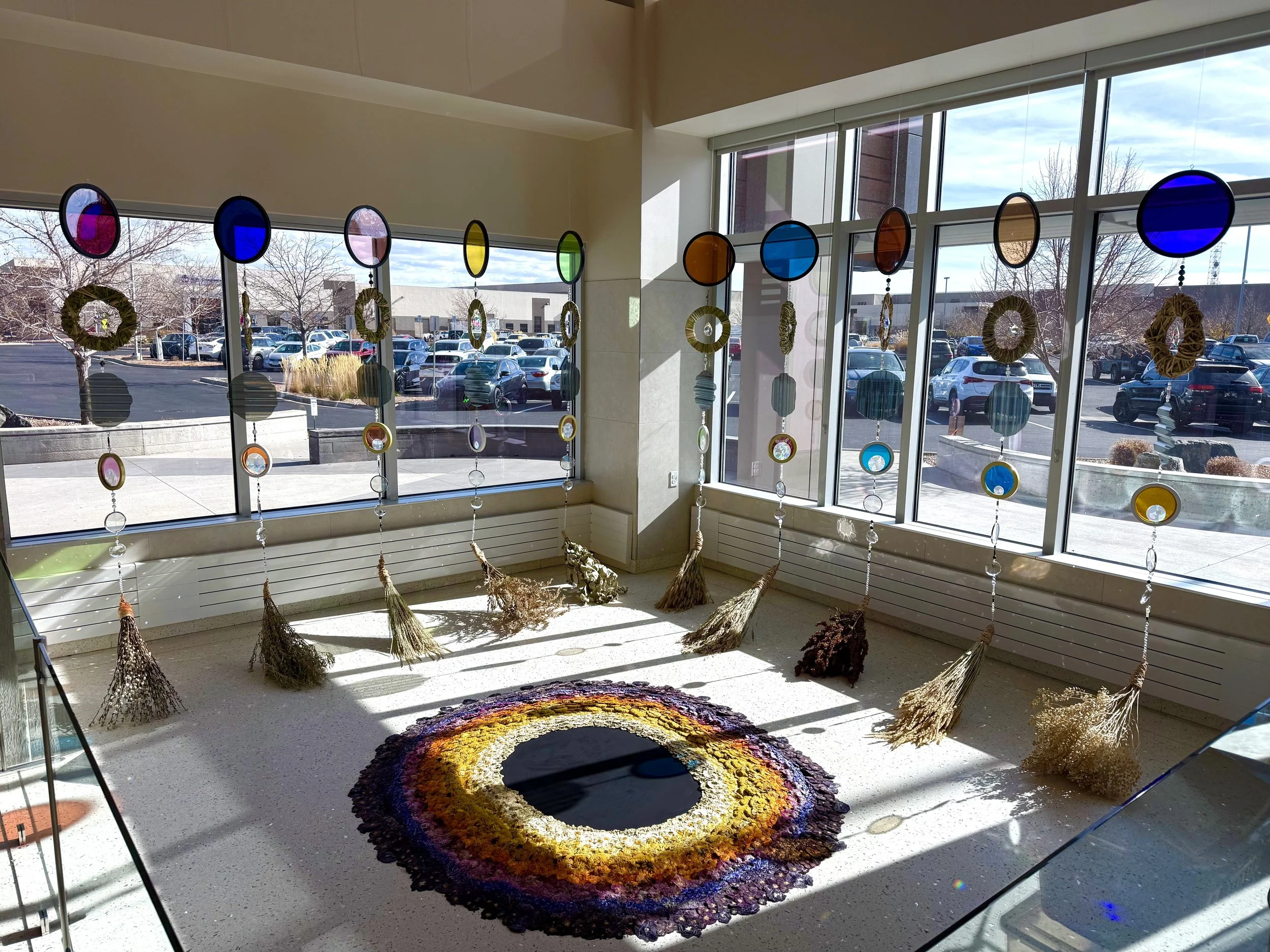
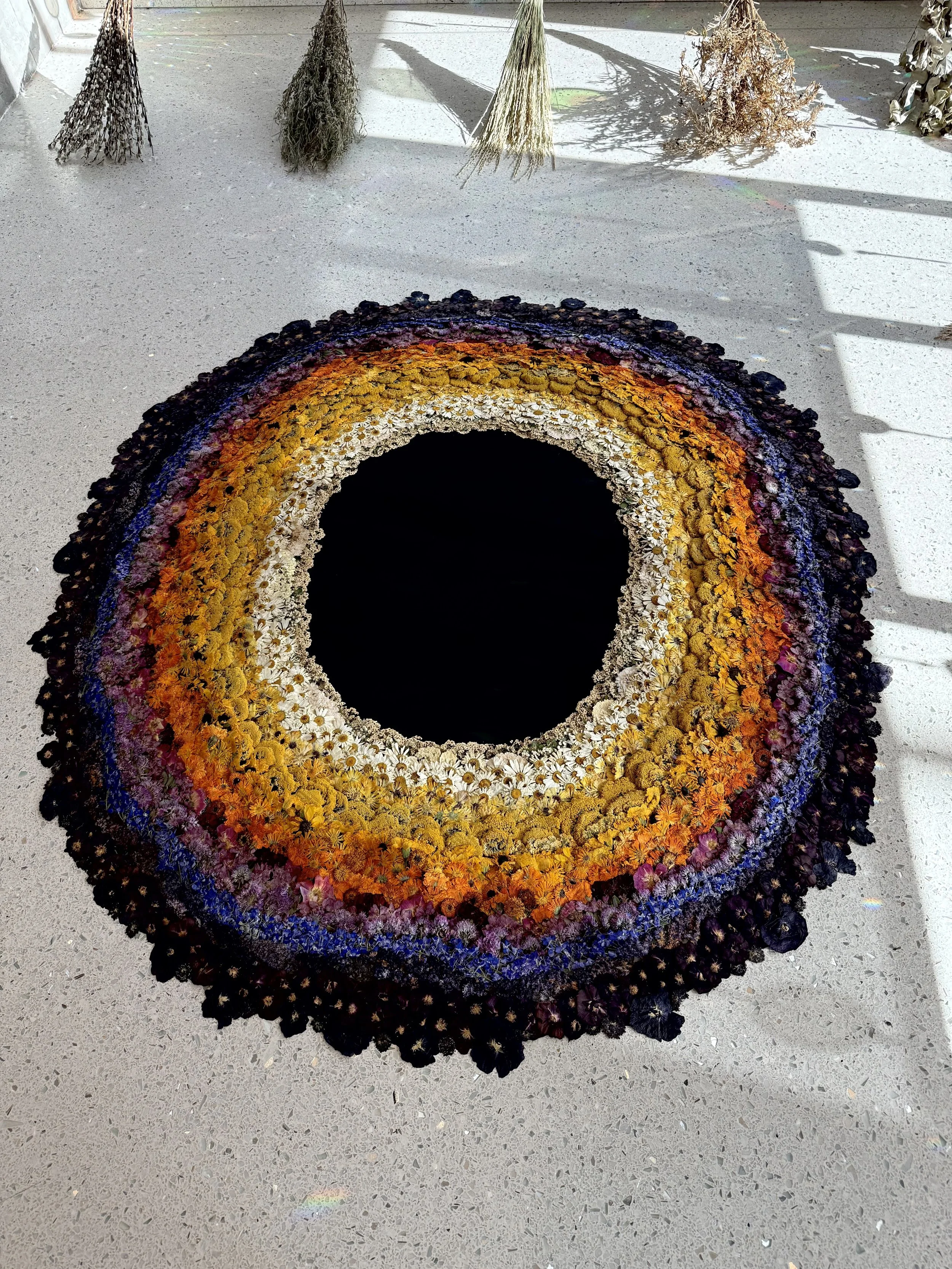
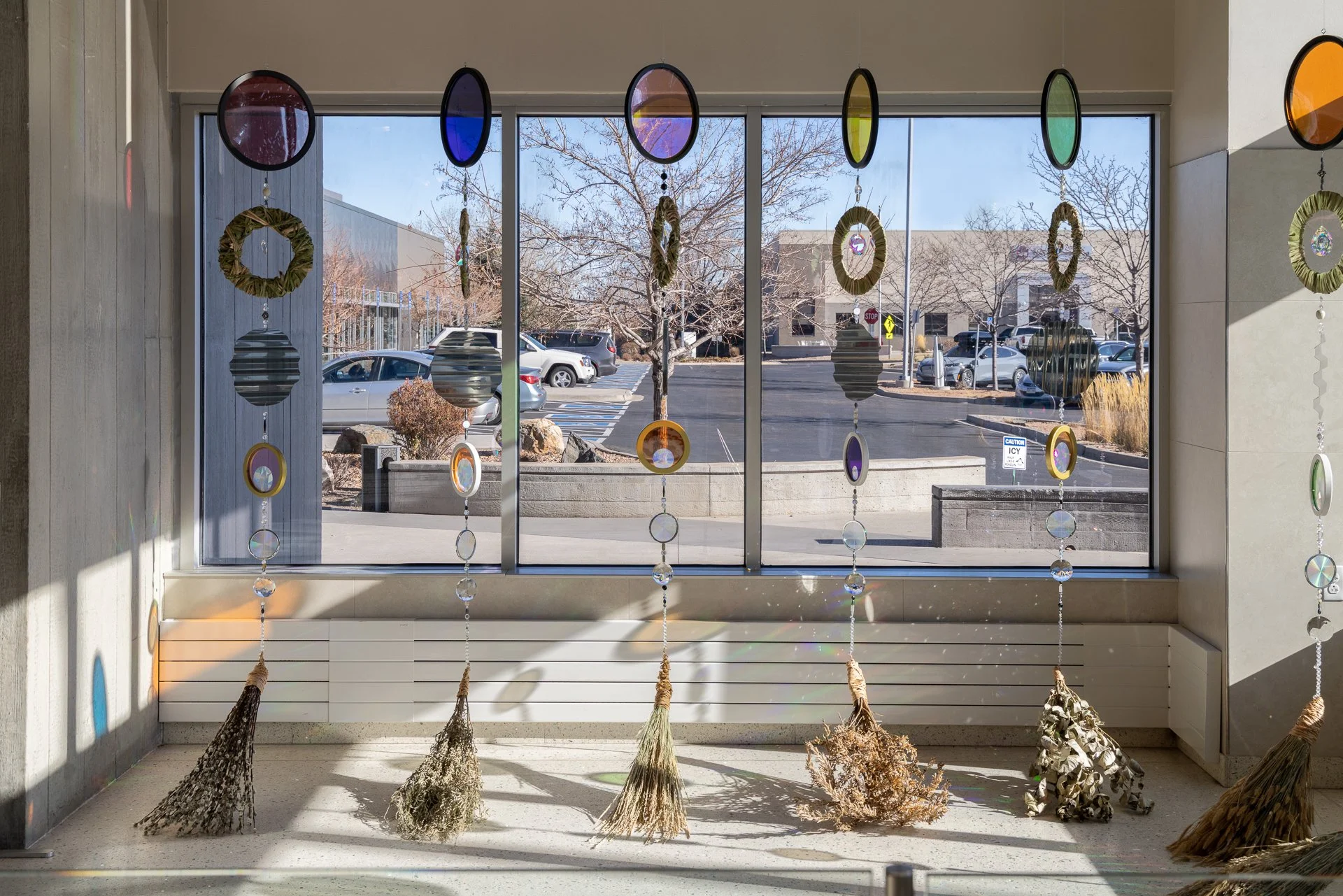
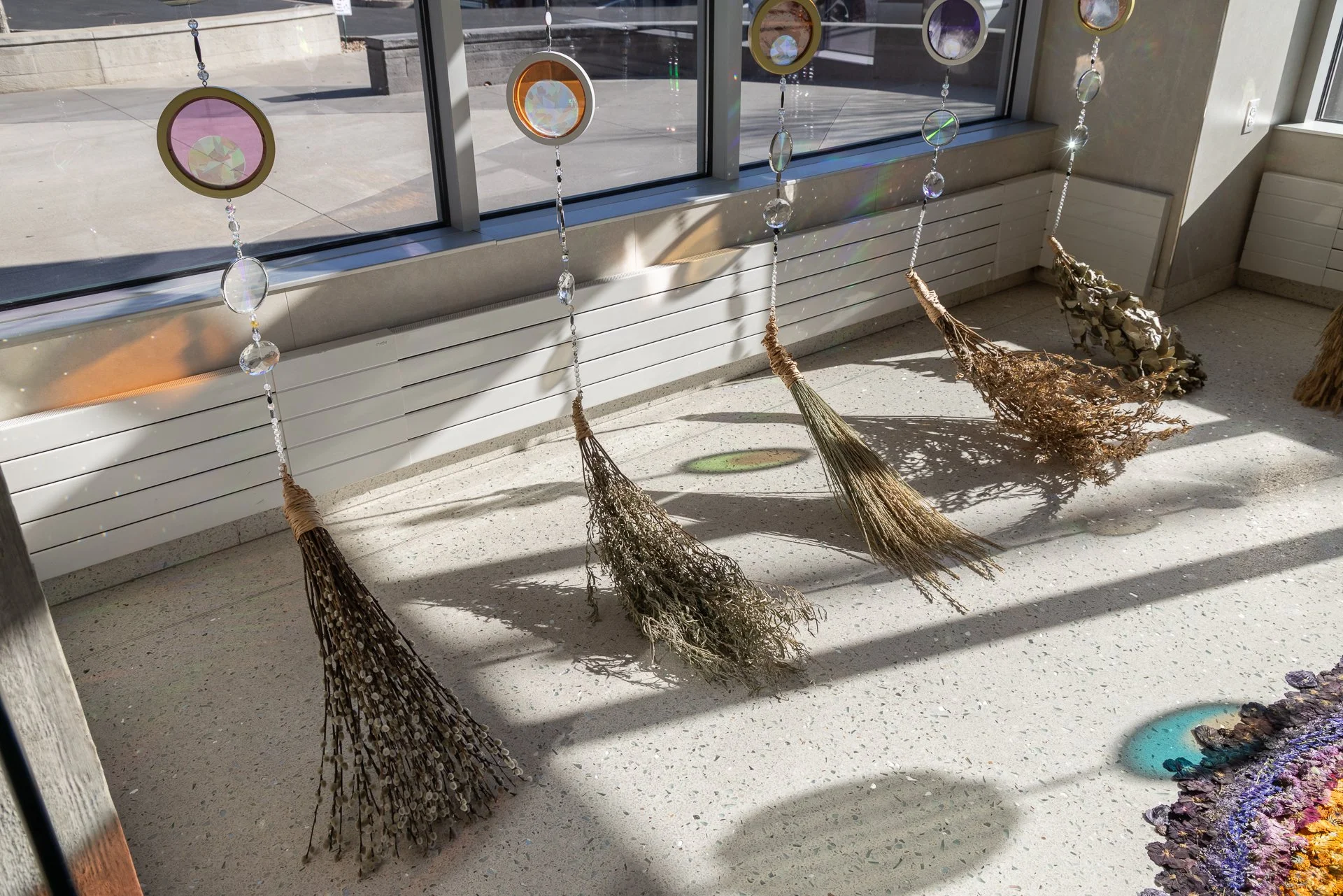
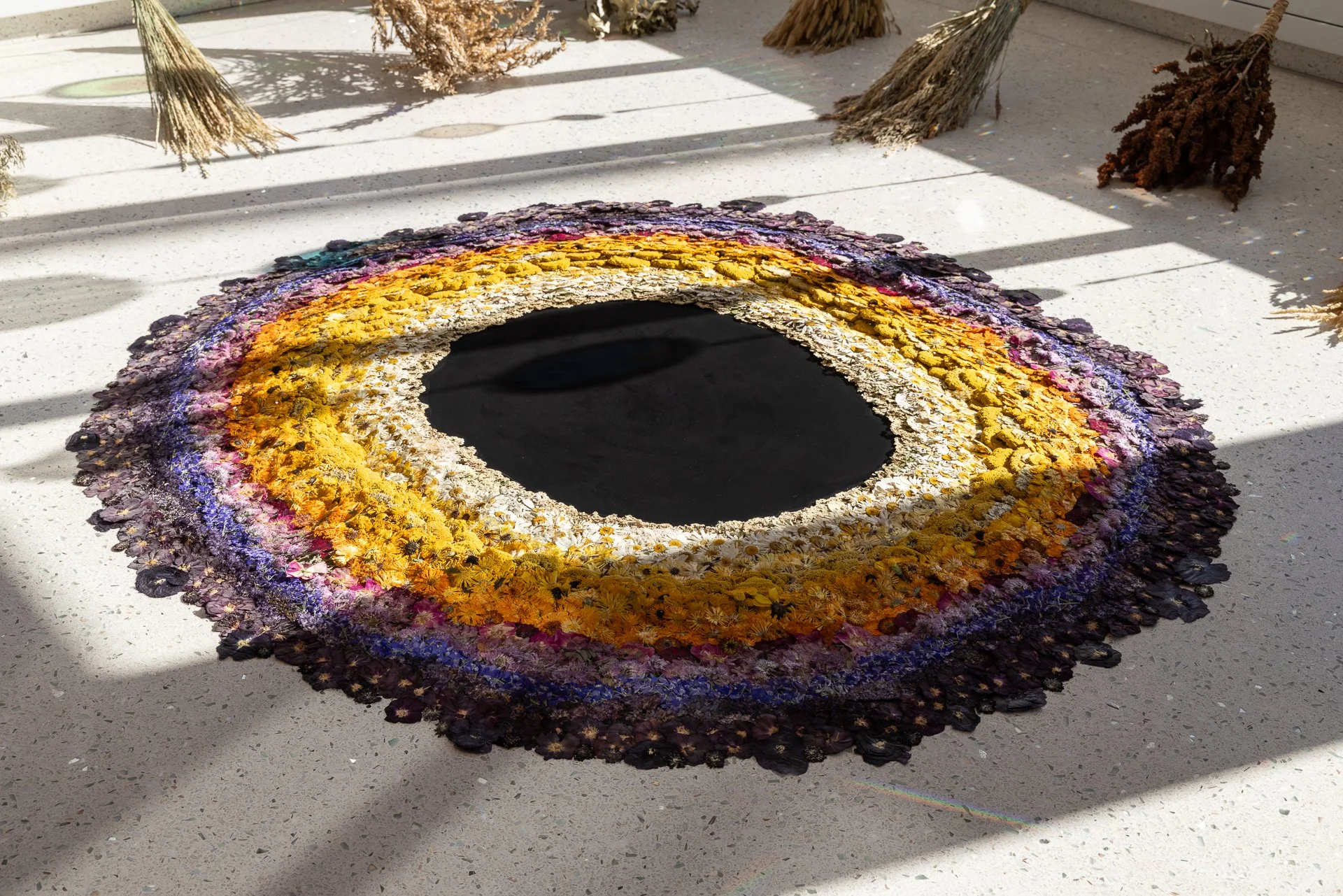
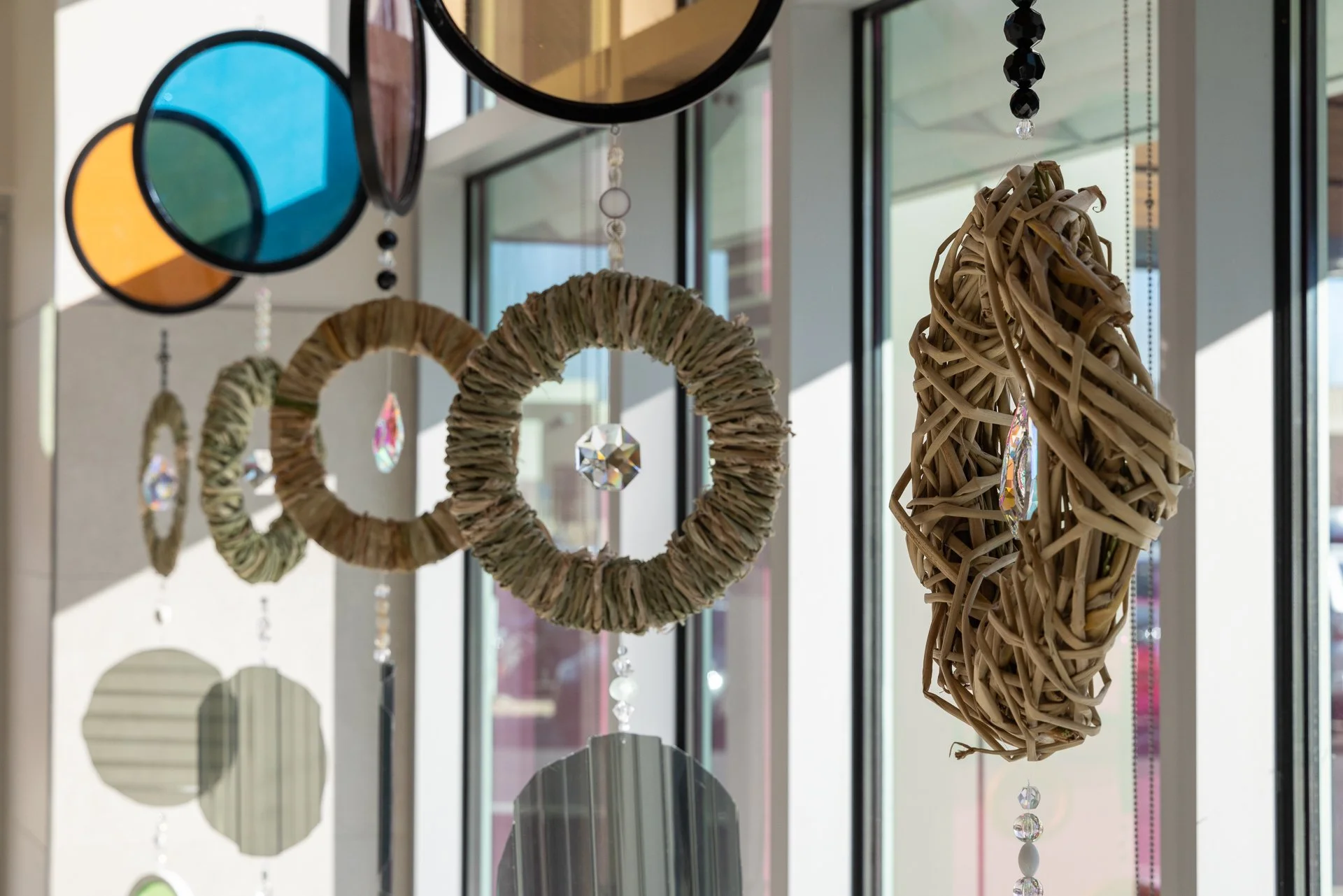
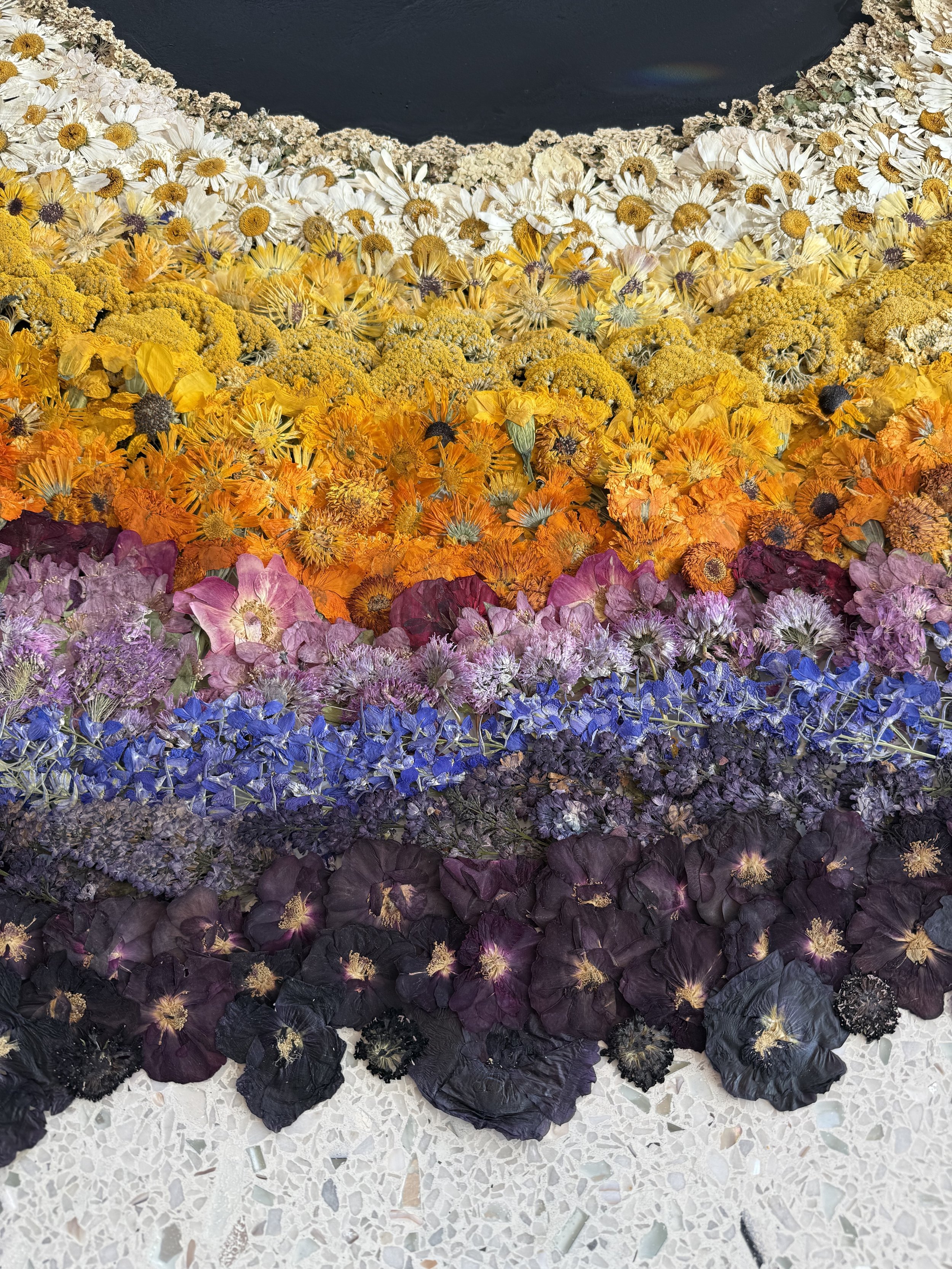
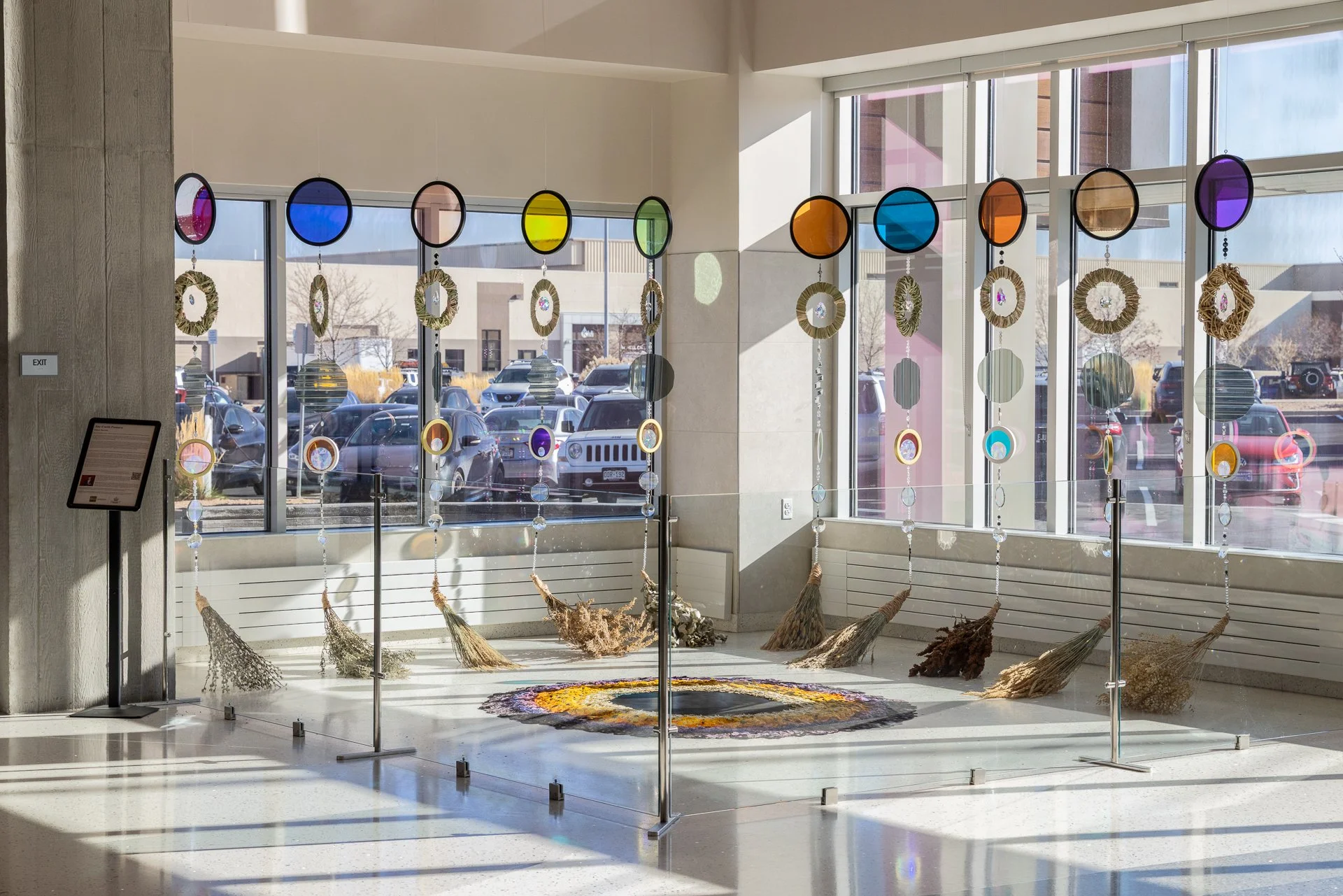
“The Carnation Gold Rush" is a term used by locals, historians and preservationists to represent the period between the 1880s and 1930s when the floriculture industry developed and thrived in Colorado, especially in Adams County. Dozens of family-owned greenhouses flourished—this greatly impacted the local economy and, for a time, designated Colorado as the Carnation Capital of the World. Spending hundreds of hours harvesting by hand—nearly every plant in this installation was sourced from Adams County open spaces or purchased and cultivated from one of the few remaining greenhouses including Elaine T. Valente, Pelican Ponds, Riverdale Bluffs Open Spaces, Spano Greenhouse, Echter’s Nursery and Garden Center, Tagawa Gardens, and other unclaimed riparian areas. Using natural materials in her installation, Roscina addresses the tension of the domesticated versus the wild flower. What is lost when we remove plants from their natural environment—out of context and communication with the rest of an ecosystem? What do we gain from our fleeting encounters with showy cut flowers as they inevitably decay? In the wild, plants live in a highly complex ecology and, being immobile, have to be incredibly creative in their adaptations. Plants use electrical impulses and chemical warning systems to communicate, transfer nutrients and water to each other, even recognize and favor their own kin. Here in the gallery, the powerful UV light shining through the windows will eventually bleach the flowers colorless. The hanging sculptures will diffract white sunlight and add color back into the installation. Roscina’s artwork not only deepens an appreciation for these light-eating cohabitants, but illuminates plant’s unique form of intelligence, agency and animacy.